Gold-Plated Watches: What to Know Before You Buy
Plated, PVD, gold-filled or solid gold: how each finish wears, and how to choose a gold watch that lasts.
We independently research every product we recommend. If you buy through links on this page, we may earn a commission at no extra cost to you. Learn more
In this article
- Gold finishes explained
- What to expect from a plated or PVD watch
- Choosing a gold watch
- Where to start
- How plating is made — and why thickness matters
- The base metal underneath
- Gold colours: yellow, rose and champagne
- Gold-tone watches for men and women
- What wear looks like — and what to do about it
- Solid gold: when is it worth it?
- Gold-plated watches as gifts
- Gold watches and sensitive skin
- A quick buyer’s checklist
- Frequently asked questions
- The bottom line
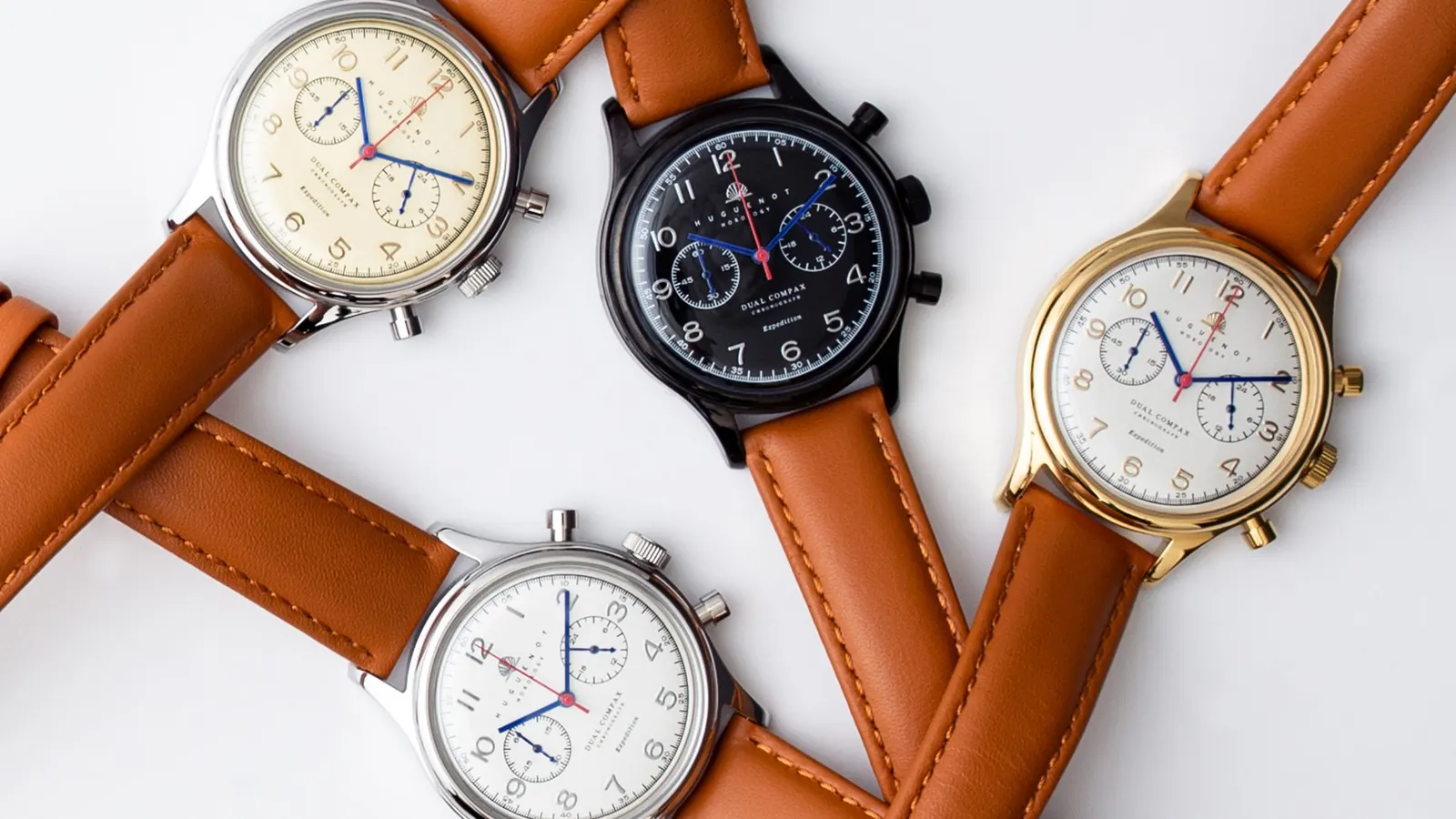
A gold watch is a classic — but “gold” on a watch listing can mean very different things. Most affordable gold watches aren’t solid gold at all: they’re steel or brass with a gold-coloured layer on top. That’s not a problem, but it does change how the watch will wear, how long the colour will last and what it’s worth. Here’s how to understand the options and choose well.
This guide replaces our older list of gold-plated watches, which was built around listings that have since changed. It’s research-based rather than a hands-on test.
Gold finishes explained
| Finish | What it is | Durability |
|---|---|---|
| Gold plated (electroplate) | A thin layer of gold applied electrically over a base metal | Lowest — can wear through on edges and clasps |
| Ion plating / PVD | A thin, hard coating applied in a vacuum process | Much more wear-resistant than standard plating |
| Gold-filled | A thicker layer of gold bonded to a base metal | Long-lasting; rare on modern watches |
| Two-tone | Steel combined with gold-coloured parts (plated, PVD or solid) | Depends on the gold part’s construction |
| Solid gold | Case made of gold alloy (e.g. 18k) | Colour never wears off; softer metal scratches |
In the US, the FTC’s jewellery guides set rules for how terms like “gold electroplate” and “gold-filled” can be used, which is why reputable listings are specific. “Gold-tone” usually means a gold-coloured finish and says nothing about the gold content.
What to expect from a plated or PVD watch
- Wear points: clasps, bracelet edges and the case underside rub most and show wear first.
- Allergies: if plating wears through, the base metal touches your skin. Stainless steel bases are generally better tolerated than brass.
- Repair: worn plating can sometimes be re-plated by a jeweller, but the cost may exceed the value of an inexpensive watch.
- Value: plated and PVD watches are priced for design, not gold content.
Choosing a gold watch
- Prefer PVD over basic plating for anything you’ll wear daily.
- Prefer a stainless steel base. Listings that mention a steel case under the gold finish are a good sign.
- Consider two-tone. Mixing steel and gold reduces the area that can visibly wear and is easier to match with other jewellery.
- Match the gold colour — yellow, rose or champagne — to the jewellery you already wear.
- Check water resistance if you’ll wear it near water. See water resistance explained.
Where to start
Our earlier list included gold-tone models from brands such as Seiko, Bulova, Invicta, Tommy Hilfiger, BOSS and Anne Klein. All of these brands still make gold-tone watches, but individual references change often — check the current model’s finish (plated, PVD or solid) and base metal before buying.
Browse men's gold-tone watches on Amazon Browse women's gold-tone watches on Amazon
For a vintage look on a small budget, Casio’s gold-tone digital watches are popular — see Casio watches for women.
Make the colour last
Take the watch off for the gym, swimming and hand-washing with harsh soaps; avoid perfume and lotions on the bracelet; wipe it with a soft dry cloth; and store it separately so it isn’t scratched by other jewellery.
How plating is made — and why thickness matters
Electroplating deposits a thin layer of gold (usually a gold alloy) onto a base metal using an electric current in a chemical bath. The thicker the layer, the longer it takes to wear through. Plating thickness is measured in microns — thousandths of a millimetre — and inexpensive fashion items may carry only a very thin layer. Better plated watches use thicker deposits or apply the gold over a barrier layer to improve durability. Unfortunately, listings rarely state plating thickness, which is one reason brand reputation matters.
PVD (physical vapour deposition) and ion plating work differently: a hard, thin film is bonded to the surface in a vacuum chamber. The result is typically much more resistant to scratching and wear than standard electroplating, which is why many reputable watch brands use PVD for gold, rose-gold and black finishes.
The base metal underneath
What’s under the gold matters as much as the gold itself:
- Stainless steel: the best base for daily wear. If the coating wears, the steel underneath is corrosion-resistant and generally well tolerated by skin.
- Brass: common on inexpensive fashion watches. It’s easy to machine but can discolour, and when plating wears through it may react with skin or tarnish.
- Zinc alloy: used on some very cheap watches; less durable and harder to repair.
Look for “stainless steel case” in the specifications alongside the gold finish.
Gold colours: yellow, rose and champagne
Gold colour comes from the alloy. Yellow gold is classic and warm; rose gold contains more copper, giving a pink tone that flatters many skin tones; “champagne” or pale gold is softer and more subtle. On PVD and plated watches, the colour is engineered to imitate these alloys. Different brands’ “rose gold” can vary noticeably, so if you want to match existing jewellery, compare photos in natural light or see the watch in person.
Gold-tone watches for men and women
Gold watches have moved in and out of fashion for decades and are firmly back. For men, a gold-tone dress watch on leather or a two-tone sports watch on a bracelet are the most versatile ways to wear gold. For women, small gold-tone watches with fine bracelets or mesh straps, vintage gold digital watches and two-tone designs are all popular — see our guide to women’s watch trends. Whatever you choose, gold looks best when it relates to other metals you wear: a gold watch with silver jewellery can work, but it’s a deliberate contrast rather than a match.
What wear looks like — and what to do about it
On plated watches, wear usually shows first on the clasp, the underside of the bracelet links and the edges of the case, where the watch rubs against desks and skin. You may see the base metal’s colour appear as a silvery or brassy patch. Options include:
- Accept the patina on a well-loved watch — some people like the lived-in look.
- Re-plating by a jeweller or plating specialist. The watch movement must be removed first, so this is best done by a watchmaker. It can be worthwhile for a sentimental piece.
- Replacing the bracelet if most wear is on the bracelet; some brands sell replacements.
Solid gold: when is it worth it?
Solid gold watches (commonly 18k, meaning 75% gold) never lose their colour, because the colour goes all the way through. They’re heavier, warmer to the touch and hold intrinsic metal value — but they’re much more expensive, and gold is softer than steel, so it scratches more easily. A solid gold watch makes sense as a long-term, special purchase; for everyday style on a budget, a PVD-coated steel watch delivers the look with greater scratch resistance.
Gold-plated watches as gifts
Gold-tone watches make attractive gifts. To choose well, pick a reputable brand that specifies a stainless steel case, prefer PVD over basic plating for a watch that will be worn daily, and choose a size that suits the recipient — our wrist size calculator helps. If you want to add diamonds or crystals, read natural vs crystal diamond watches first.
Gold watches and sensitive skin
Some people react to metals in jewellery, most often nickel. On a well-made gold-tone watch, the coating and a stainless steel base usually keep problems to a minimum, but reactions can appear when plating wears through to a base metal containing nickel or copper. If you have sensitive skin, choose PVD over standard plating, prefer stainless steel or titanium bases, and consider a leather or fabric strap so less metal touches your skin. A green or dark mark on the skin is usually a reaction between metal, sweat and moisture rather than a sign of a fake — cleaning the watch and keeping it dry often helps. If irritation persists, stop wearing it and choose a different material.
A quick buyer’s checklist
Before buying a gold watch, confirm whether the gold is plated, PVD, gold-filled or solid; check that the case is stainless steel underneath; consider a two-tone design for durability; and buy from an authorised seller with a clear warranty and returns policy.
Frequently asked questions
How long does gold plating last on a watch?
It depends on the thickness and how the watch is worn. Thin plating can show wear within months on high-contact areas; PVD typically lasts much longer.
Is PVD gold better than gold plating?
PVD coatings are generally harder and more wear-resistant than standard electroplating.
Is a gold-tone watch real gold?
”Gold-tone” describes the colour only. It may be plated, PVD-coated or neither — check the listing.
Can gold plating be repaired?
A jeweller can sometimes re-plate a watch, but it may not be worthwhile for an inexpensive model.
Will a gold-plated watch turn my skin green?
It can if the plating wears through to a copper-containing base metal. Stainless steel bases are less likely to cause this.
The bottom line
Gold-plated watches give you the look of gold for a fraction of the price. Choose PVD over thin plating, a steel base over brass, and treat the finish kindly. For diamond-set gold watches, read our diamond watches guide.
You may also like
Best Watches Under $500
Ten watches from Seiko, Orient, Citizen and Tissot, each chosen for a specific job, from dress and dive to travel and solar no-fuss wear.
Tissot PRX Powermatic 80 Review: Is the 80-Hour Swiss Automatic Worth It?
A slim, integrated-bracelet Swiss automatic with an 80-hour reserve. We look at what the specs promise, where it falls short and who should buy it.
Natural vs Crystal Diamond Watches: How to Tell the Difference
Diamond, lab-grown, moissanite, cubic zirconia or glass crystal — what's sparkling on your watch, and does it matter?