Automatic vs Quartz Watches: Which Movement Is Right for You?
Spring and balance wheel or crystal and battery? How each movement works, how accurate they really are, and which suits the way you wear a watch.
We independently research every product we recommend. If you buy through links on this page, we may earn a commission at no extra cost to you. Learn more
In this article
- How a mechanical (automatic) watch works
- What makes a watch “automatic”
- Hand-wound mechanical watches
- How a quartz watch works
- High-frequency and high-accuracy quartz
- Solar quartz
- Accuracy: what to realistically expect
- Maintenance and running costs
- Quartz
- Mechanical
- Cost: what your money buys
- Feel, sound and the sweeping seconds hand
- Longevity: which lasts longer?
- Which should you choose?
- Choose quartz (or solar) if…
- Choose automatic if…
- Choose hand-wound if…
- Frequently asked questions
- The bottom line
Every analog watch is built around one basic decision: what keeps time inside the case. A quartz watch counts the vibrations of a tiny crystal and runs on electricity. An automatic watch runs on a coiled spring, a set of gears and a balance wheel swinging back and forth several times a second, with no battery at all. The two can look identical from across a room, yet they differ in accuracy, upkeep, cost and the kind of relationship you have with the watch.
This guide explains how each movement works, where the hybrids fit (solar quartz and hand-wound mechanicals), and which type tends to suit which kind of owner. If you would rather answer a few questions and get a recommendation, try our interactive automatic vs quartz decision tool first, then come back here for the detail.
| Watch | Movement | Case size | Water resistance | Crystal | Best for | Link |
|---|---|---|---|---|---|---|
| Seiko 5 Sports SKX SeriesSRPD55 | Automatic (4R36) | 42.5 mm | 100 m (330 ft) | Hardlex | A first affordable automatic | Check Price |
| Tissot PRX 40mm QuartzT137.410.11.041.00 | Quartz | 40 mm | 100 m (330 ft) | Sapphire | Grab-and-go quartz in a dressier case | Check Price |
| Citizen Promaster Diver Eco-DriveBN0150-28E | Solar quartz (E168) | 44 mm | 200 m (660 ft) | Anti-reflective mineral crystal | Solar-powered, low-maintenance diving and travel | Check Price |
| Hamilton Khaki Field Mechanical 38mmH69439931 | Hand-wound (H-50) | 38 mm | 50 m (160 ft) | Sapphire | Hand-winding ritual in a slim case | Check Price |
“Check Price” links go to Amazon (affiliate links). We don’t list prices because they change frequently.
How a mechanical (automatic) watch works
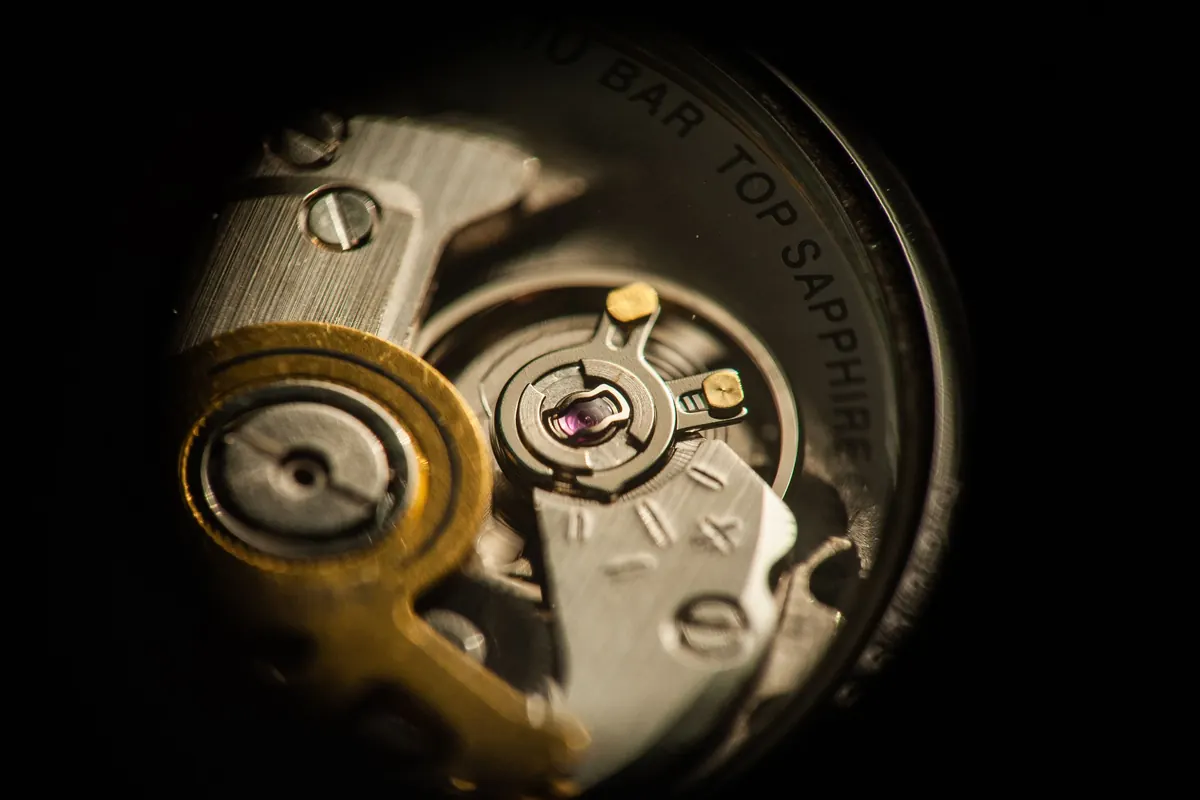
A mechanical movement stores energy in a mainspring, a long strip of metal coiled inside a drum called the barrel. As the spring slowly unwinds, it pushes energy through a chain of gears (the gear train). Left alone, the spring would release all that energy in a fraction of a second. The part that stops this from happening is the escapement.
The escapement works with the balance wheel and its hairspring. The balance swings back and forth at a steady rate, and on each swing the escapement lets the gear train advance by a tiny, fixed amount. Most modern movements beat at 21,600 or 28,800 vibrations per hour (vph), which is 6 or 8 ticks per second. Longines, for example, quotes 25,200 vph for the L888 inside its HydroConquest. Those regular releases of energy are what drive the hands.
What makes a watch “automatic”
An automatic (or self-winding) watch adds a rotor, a weighted half-disc that pivots freely as your wrist moves. Through a set of reduction gears, the rotor winds the mainspring while you wear the watch. Take it off, and it keeps running until the stored energy is used up. That period is the power reserve. Seiko quotes approximately 41 hours for the 4R36 calibre in the Seiko 5 Sports SRPD55; Tissot quotes 80 hours for the Powermatic 80. Many automatics, including the 4R36, can also be wound by turning the crown.
Hand-wound mechanical watches
A hand-wound (manual) watch is the same mechanism minus the rotor. You wind it by turning the crown, typically once a day or every few days, depending on its reserve. Without a rotor, the movement can be thinner. The Hamilton Khaki Field Mechanical 38mm is a good modern example: its H-50 calibre carries an 80-hour power reserve, and the case is a slim 9.5 mm thick. Winding is a small daily ritual. Some people love it, and others would rather the watch looked after itself.
How a quartz watch works
A quartz watch replaces the spring and balance with a battery and a sliver of quartz crystal, usually cut into the shape of a tiny tuning fork. Quartz is piezoelectric: apply a voltage and it vibrates at a very stable frequency. In most watches that frequency is 32,768 Hz, which is 215. An integrated circuit counts the vibrations and halves the figure fifteen times to arrive at exactly one pulse per second.
Each pulse goes to a small stepping motor, which turns the gears that move the hands. That is why the seconds hand on most quartz watches jumps once per second instead of gliding. Because the oscillator vibrates thousands of times a second rather than a handful, quartz is far less affected by position, temperature changes and the slow unwinding of a spring, which is the main reason it is so accurate.
High-frequency and high-accuracy quartz
Some quartz watches run their crystal at a higher frequency or add temperature compensation to improve accuracy further. Bulova’s Lunar Pilot Chronograph, for instance, uses a 262 kHz high-precision quartz movement (the 96B258 reference has been discontinued, so it may be harder to find new).
Solar quartz
Solar quartz watches, such as Citizen’s Eco-Drive range, work like any other quartz watch, except a light-sensitive panel under the dial charges a rechargeable cell instead of relying on a disposable battery. Daylight or ordinary indoor light keeps it topped up. Citizen quotes a reserve of approximately 6 months from a full charge for the Promaster Diver BN0150, so it can sit in a drawer for a long time and still be running when you pick it up. The rechargeable cell does age eventually, but routine battery swaps are not part of ownership.
The one-sentence version
A quartz watch is a small electronic clock that keeps excellent time with almost no effort from you; a mechanical watch is a miniature machine that keeps good time and asks for a little attention in return.
Accuracy: what to realistically expect
This is where the two differ most, and where marketing can muddy things. Keep the following ranges in mind as rough, typical figures rather than guarantees. Individual watches vary, and manufacturers publish their own tolerances.
| Movement type | Typical accuracy | Notes |
|---|---|---|
| Standard quartz | Roughly ±10–20 seconds per month | Casio, for example, quotes ±20 sec/month for its Duro diver |
| High-accuracy quartz | A few seconds per month, or seconds per year for the best | Uses higher frequencies and/or temperature compensation |
| Entry-level automatic | Often within roughly 10–30 seconds per day | Factory tolerances on affordable movements can be wider still |
| COSC-certified chronometer | −4 to +6 seconds per day | Tested uncased over several days in multiple positions and temperatures |
In other words, an ordinary quartz watch might drift a few minutes over a year, while a healthy affordable automatic can drift that much in a week or two. Neither means something is broken; a mechanical watch’s rate also shifts with position and with how fully the mainspring is wound.
The COSC (Contrôle Officiel Suisse des Chronomètres) is the Swiss body that certifies chronometers. Its standard for mechanical movements, an average daily rate of −4 to +6 seconds, is the yardstick most people mean when they say a mechanical watch is “chronometer-grade.” Even that is far looser than standard quartz.
One more factor is magnetism. Everyday magnets in phones, laptop lids and bag clasps can magnetize a traditional hairspring and make a mechanical watch run fast. Newer alloys help; Hamilton and Tissot list a Nivachron balance spring on the Khaki Field Mechanical and the PRX Powermatic 80 respectively, a material designed to be more resistant to magnetic fields. Quartz watches are much less affected in normal life.
Maintenance and running costs
Quartz
A standard quartz watch needs a new battery every few years, with the exact interval depending on the movement and features such as lights and alarms. Some, like the Tissot PRX Quartz, include an end-of-life indicator that tells you when the battery is running low. When you change the battery, it is worth having the seals checked so water resistance is maintained (more on that in our guide to what water resistance ratings really mean). Beyond that, many quartz watches run for years without any further work. Solar models skip routine battery changes entirely.
Mechanical
A mechanical movement relies on tiny amounts of oil that degrade over time. Watchmakers commonly suggest a full service somewhere around every five to ten years, depending on the movement and use. A service (disassembly, cleaning, re-lubrication and regulation) can cost a meaningful fraction of what an affordable automatic cost new, so some owners of inexpensive automatics simply wait until the watch needs attention.
Day to day, an automatic you do not wear will stop once its power reserve runs out, and you will need to reset the time (and date, if it has one) when you pick it up. If you rotate several automatics, that is where a watch winder comes in; our guide on whether you need a watch winder covers the pros and cons.
Cost: what your money buys
Quartz is cheaper to make, so at any given price a quartz watch tends to offer more for the money in other areas: a sapphire crystal, a better bracelet, more features. Both versions of the Tissot PRX are a neat illustration. The quartz model is typically sold in the $200–$500 range, while the Powermatic 80 automatic sits a band higher at $500–$1,000. Case size, sapphire crystal and 100 m water resistance are shared; what you pay extra for is the mechanical movement and its 80-hour reserve.
At the budget end, quartz is almost unbeatable. Our roundup of watches under $100 is dominated by quartz and digital pieces for exactly this reason. Mechanical watches start to make sense as value propositions once you are willing to spend a bit more; the best watches under $500 include several well-regarded automatics alongside quartz options.
Feel, sound and the sweeping seconds hand
Much of the appeal of mechanical watches is not practical at all. Because the balance beats several times per second, an automatic’s seconds hand advances in small steps that read as a smooth sweep, while most quartz hands tick once a second. A display case back lets you watch the rotor and balance at work, and many enthusiasts like knowing there is nothing electronic inside.
Quartz has its own appeal: pick it up after a month in a drawer and it still shows the right time.
Longevity: which lasts longer?
Both can last decades with care, but in different ways. A well-made mechanical movement can, in principle, be serviced indefinitely, because a watchmaker can clean it, replace worn parts and, if necessary, make new ones. That repairability is a big reason vintage mechanical watches still run today.
Quartz movements have few moving parts and wear very little, but they depend on electronics. When a circuit fails on an inexpensive quartz watch, the usual fix is to swap in a replacement movement, provided a compatible one is still available. Leaking batteries are the most common avoidable cause of damage, so do not leave a dead battery in a quartz watch for long.
Which should you choose?
Choose quartz (or solar) if…
- You want the most accurate time with the least effort.
- You wear several watches and do not want to reset each one when you pick it up.
- Your budget is tight and you would rather spend it on the case, crystal or bracelet.
- You want a reliable tool watch for travel, swimming or work. A solar diver like the Citizen Promaster BN0150 is about as low-maintenance as analog watches get.
Choose automatic if…
- You are interested in how watches work and enjoy the craft behind them.
- You wear one watch most days, so it stays wound on its own.
- You can accept a few seconds’ daily drift and occasional servicing in return for the character of a mechanical movement.
- You want something that can, in principle, be repaired for decades.
If that sounds like you, our guide to the best automatic watches for beginners is a good next step, and the Seiko 5 Sports SRPD55 review covers one of the most common first automatics in detail.
Choose hand-wound if…
- You like the idea of a daily ritual and a direct connection to the watch.
- You value a slim case. The Hamilton Khaki Field Mechanical is just 9.5 mm thick on paper.
- You do not mind that it will stop if you forget to wind it.
Frequently asked questions
Is an automatic watch better than a quartz watch?
Not objectively. Quartz is more accurate, cheaper and lower maintenance; automatic watches offer mechanical craftsmanship, a sweeping seconds hand and long-term repairability. Which is better depends on what you value.
Do automatic watches need batteries?
No. An automatic watch is powered by a mainspring that is wound by a rotor as you move your wrist, and often by turning the crown as well. There is no battery inside.
How long does an automatic watch run when I take it off?
Until its power reserve runs out. That varies by movement: Seiko quotes approximately 41 hours for the 4R36, while the Tissot Powermatic 80 and Hamilton H-50 are quoted at 80 hours.
Why does my automatic watch gain or lose a few seconds a day?
That is normal for a mechanical movement. Position, temperature, how fully the spring is wound and magnetism all affect the rate. Many affordable automatics run within a few tens of seconds per day, while COSC chronometers must average −4 to +6 seconds per day.
How often does a quartz watch need a new battery?
Typically every few years, depending on the movement and features. Solar quartz watches use a rechargeable cell charged by light, so routine battery changes are not needed.
Can I overwind an automatic watch?
Modern automatic movements use a slipping mainspring arrangement that prevents overwinding. Hand-wound watches have a hard stop at full wind, so stop turning the crown when you feel resistance.
The bottom line
If you want a watch that simply works, choose quartz, and give solar a close look if you hate battery changes. If you want a watch you can get interested in, with a movement that runs on stored energy and can be repaired for generations, choose mechanical, either automatic for convenience or hand-wound for the ritual. Many collectors end up owning both.
Still undecided? Our automatic vs quartz tool weighs your habits and priorities and points you to the right movement, and the Watch Finder quiz can then suggest specific models to match.
You may also like
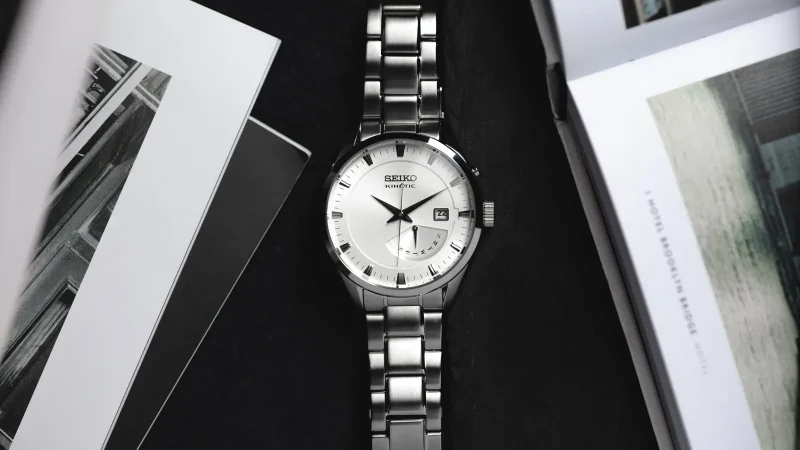
Best Watches Under $500
Ten watches from Seiko, Orient, Citizen and Tissot, each chosen for a specific job, from dress and dive to travel and solar no-fuss wear.
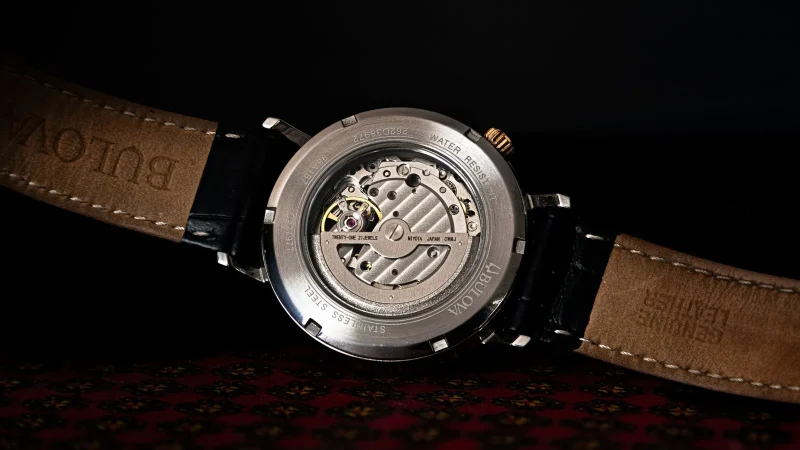
Best Automatic Watches for Beginners
Seven automatics and one hand-wound alternative for a first mechanical watch, with hacking, hand-winding, power reserve and accuracy explained.
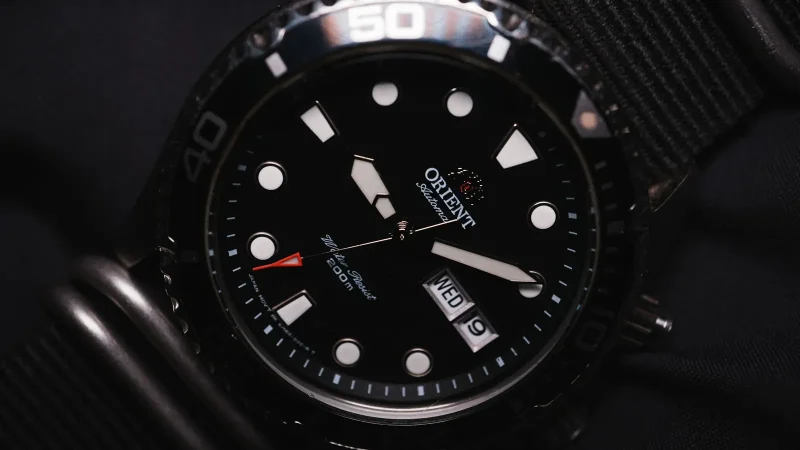
Best Affordable Dive Watches
Five divers from a budget Casio to a Swiss step-up, plus what ISO 6425, unidirectional bezels, lume and screw-down crowns actually mean.