Seiko 5 Sports SRPD55 Review: The Default First Automatic?
The SRPD55 is the watch everyone recommends as a first automatic. We weigh its 4R36 movement, case size and compromises against newer rivals.
We independently research every product we recommend. If you buy through links on this page, we may earn a commission at no extra cost to you. Learn more
In this article
Ask a room of watch enthusiasts what someone should buy as a first automatic and a Seiko 5 will come up before anyone finishes their coffee. The current 5 Sports line, and the black-dial SRPD55 in particular, inherits that reputation from decades of affordable, mechanical Seikos that people actually wore every day. The question worth asking is whether it still deserves to be the reflexive answer, or whether newer rivals have quietly moved the goalposts.
This is a research-based review built on Seiko’s published specifications and the model’s long track record — we haven’t tested this watch ourselves. Every figure below comes from Seiko’s own product data, and where we lean on wider owner experience, we say so. You can read more about how we build reviews like this in our methodology.
Seiko 5 Sports SKX Series specifications
Manufacturer-published data- Movement
- Automatic (4R36)
- Case size
- 42.5 mm
- Water resistance
- 100 m (330 ft)
- Crystal
- Hardlex
- Thickness
- 13.4 mm
- Lug-to-lug
- 46 mm
- Lug width
- 22 mm
- Case material
- Stainless steel
- Strap / bracelet
- Stainless steel bracelet, three-fold clasp with secure lock and push-button release
- Power reserve
- Approx. 41 hours
- Reference
- SRPD55
- Notable features
- Hacking (stop-second), Hand-winding, Day/date, Unidirectional rotating bezel, See-through screw case back, LumiBrite
Sources: seikowatches.com. Specifications can vary by reference and production year — confirm on the product listing before buying.
Design and case
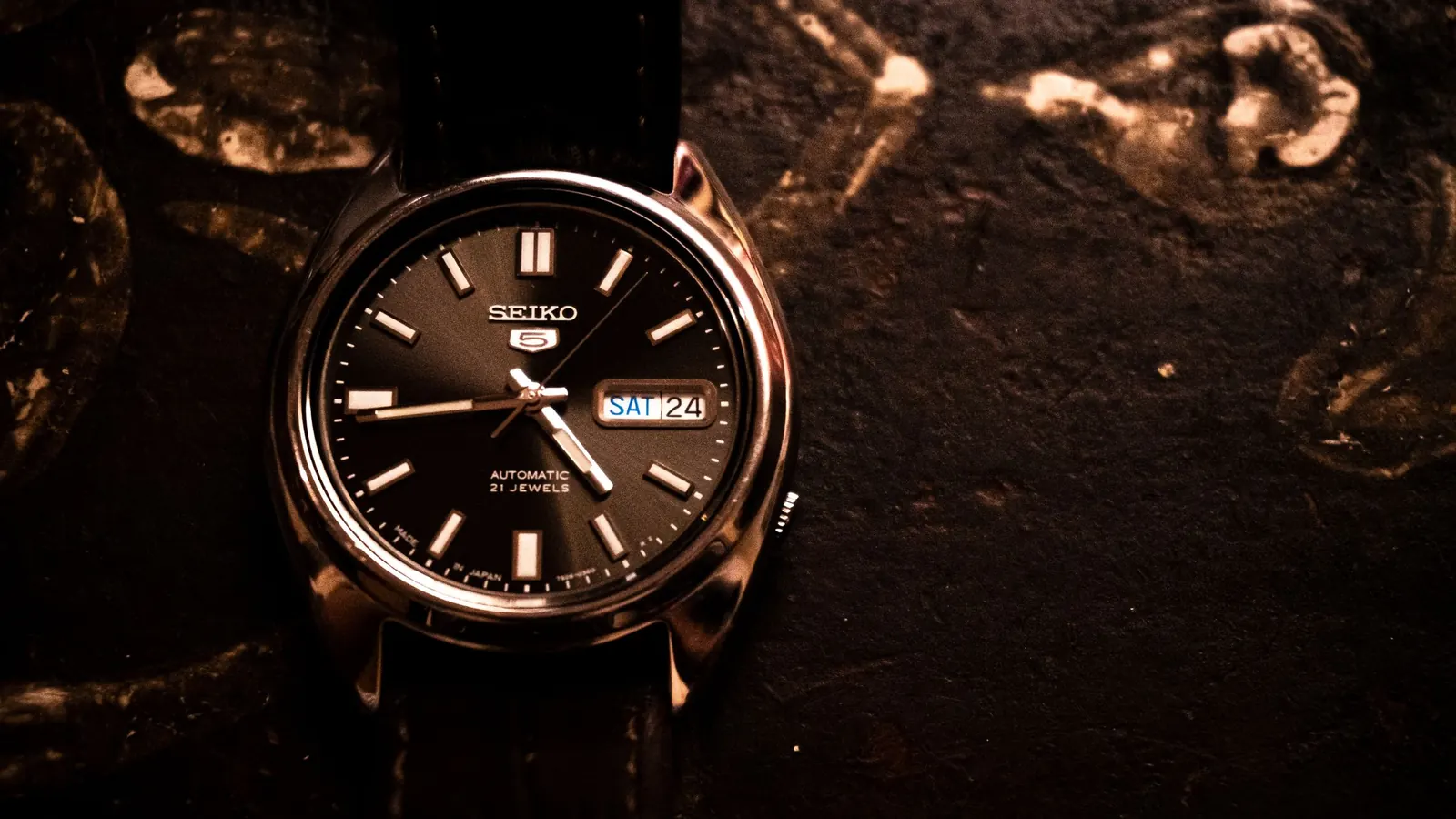
The SRPD55 belongs to the 5 Sports “SKX series,” and the name is a deliberate nod. Its shape borrows heavily from the long-running Seiko SKX diver: a cushion-ish steel case, a crown at four o’clock, a unidirectional rotating bezel and a black dial with chunky applied-style markers. The day and date sit at three o’clock, which is exactly what you want from a watch meant to live on your wrist every day.
The numbers tell you most of what you need to know about fit. Seiko lists a 42.5 mm case diameter, a 13.4 mm thickness and a 46.0 mm lug-to-lug measurement, with 22 mm lugs.
That lug-to-lug figure is the most useful of the three. A 42.5 mm diameter sounds large to newcomers, but diameter alone is misleading, especially on a diver-style case where some of the width is bezel. Lug-to-lug determines whether the watch overhangs the top and bottom of your wrist, and 46.0 mm is moderate for a sports watch. As a rough rule, if the flat top of your wrist is wider than about 46 mm, the lugs should sit within it rather than hang past the edges.
Thickness is where the SRPD55 is more of a commitment. At 13.4 mm it is a chunky watch, which is typical for this class of automatic and partly a result of the exhibition caseback. It will sit higher than a slim dress watch and may catch on a tight shirt cuff. For casual wear and weekends that rarely matters; under a fitted suit it might.
The 22 mm lug width is good news for anyone who likes changing straps. It is one of the most common sizes, so NATO straps, rubber straps and leather alternatives are easy to find. The SRPD55 ships on a stainless steel bracelet with a three-fold clasp, a secure lock and a push-button release.
If you are unsure whether these proportions suit you, start with our wrist size calculator, then put the SRPD55 side by side with a watch you already own using the watch size comparison tool.
Movement: the Seiko 4R36
Inside is Seiko’s in-house calibre 4R36, a workhorse automatic that has powered a long list of Seiko models. For a first mechanical watch, its feature set is more important than any headline figure.
- Hacking. Pull the crown out to the time-setting position and the seconds hand stops. That makes it easy to set the watch precisely to a reference clock. Older Seiko 5 models lacked this, and it was a common complaint.
- Hand-winding. You can wind the mainspring through the crown. If the watch has stopped after a few days in a drawer, a few dozen turns will get it running without having to shake it or wear it for hours.
- Power reserve of approximately 41 hours. Fully wound, the 4R36 will run for a little under two days off the wrist. Take it off on Friday evening and it will probably have stopped by Sunday.
Accuracy is where expectations need setting. Seiko’s published accuracy specification for the 4R36 calibre is −35 to +45 seconds per day. That is a generous tolerance compared with chronometer-grade Swiss movements, and it is very loose compared with any quartz watch. In practice, owners commonly report that individual examples run well inside that range, but Seiko only guarantees the published figure, and you should buy the watch assuming it may drift by more than you would like.
For most people this is a non-issue. A mechanical watch is something you glance at, not a laboratory instrument, and with hacking you can reset it in seconds whenever you notice drift. If tight timekeeping matters to you more than the experience of a mechanical movement, our guide to automatic vs quartz watches is worth reading before you commit.
Why the 41-hour reserve matters
If you rotate between several watches, an automatic with around 41 hours of reserve will usually have stopped by the time you pick it up again. That is not a fault — you simply hand-wind it a few turns, set the time and date, and go. If you wear it daily, the rotor keeps it topped up and you can ignore the reserve almost entirely.
Water resistance and daily use
Seiko rates the SRPD55 to 100 m of water resistance. Despite the dive-style bezel, it is not presented as a certified dive watch: Seiko does not list a screw-down crown in its specifications, and the caseback is a see-through screw design rather than a solid one. In everyday terms, a 100 m rating comfortably covers hand-washing, rain and recreational swimming, as long as the crown is pushed fully home and the seals are in good condition.
The “100 m” figure is a laboratory pressure rating, not a depth you should dive to. Our explainer on watch water resistance breaks down what each rating actually means in practice. If you want a mechanical watch for regular snorkeling or diving, an ISO-rated diver is a better tool.
For everything else, the SRPD55 is built for daily life. The unidirectional bezel is genuinely useful for timing things — a parking meter, a pasta pot, a meeting that should have ended. Seiko’s LumiBrite on the hands and markers helps with legibility in the dark. The day/date complication saves you from checking your phone for the date, and a steel bracelet will take scuffs in its stride.
The crystal is the one area where we would temper expectations. Seiko uses Hardlex, its own hardened mineral glass. It is tougher than ordinary mineral glass but softer than sapphire, so it is more likely to pick up scratches over years of wear. The upside is that it is less brittle and cheap to replace. Our guide to sapphire vs mineral crystal explains the trade-off in detail.
Value
The SRPD55 is typically sold in the $200–$500 range, and its value case rests on a combination rather than any single standout feature. For that money you get an in-house automatic movement with hacking and hand-winding, a day/date display, 100 m of water resistance, a rotating bezel, a display caseback and a steel bracelet, from a maker with an enormous service and parts network.
What you do not get is equally clear. There is no sapphire crystal, the case is on the thick side, and the accuracy specification is loose. Several rivals in the same broad price band offer sapphire or more water resistance. The Seiko answers with familiarity: the 4R36 is widely understood by watchmakers, the SKX-derived design has a huge following, and the 22 mm lugs open up a massive aftermarket of straps.
That ecosystem is part of the value. A first automatic is as much an education as a purchase, and the Seiko 5 Sports is one of the easiest watches to learn on, swap straps on and eventually hand down or sell on.
Pros
- Proven in-house 4R36 automatic with hacking and hand-winding
- Day/date display and unidirectional bezel are genuinely useful daily
- 100 m water resistance covers swimming and everyday wear
- Moderate 46.0 mm lug-to-lug wears smaller than the 42.5 mm diameter suggests
- Common 22 mm lugs make strap changes easy
Cons
- Hardlex crystal scratches more readily than sapphire
- 13.4 mm thickness is chunky under shirt cuffs
- Seiko's −35/+45 s/day accuracy spec is loose
- Approx. 41-hour reserve means it stops over a weekend off the wrist
- No screw-down crown listed, so not a true dive tool
Alternatives
The SRPD55 is not the only sensible first automatic. Here is how it compares on paper with three watches that cross-shop it most often.
| Watch | Movement | Case size | Water resistance | Crystal | Best for | Link |
|---|---|---|---|---|---|---|
| Seiko 5 Sports SKX SeriesSRPD55 | Automatic (4R36) | 42.5 mm | 100 m (330 ft) | Hardlex | A classic first automatic | Check Price |
| Orient Kamasu (Mako III) Automatic DiverRA-AA0003R19A | Automatic (F6922) | 41.8 mm | 200 m (660 ft) | Sapphire | Sapphire and 200 m on a budget | Check Price |
| Citizen Tsuyosa AutomaticNJ0150-56L | Automatic (8210) | 40 mm | 50 m (160 ft) | Sapphire | Integrated-bracelet style with color | Check Price |
| Seiko 5 Sports GMT (SKX series)SSK001 | Automatic (4R34) | 42.5 mm | 100 m (330 ft) | Hardlex with magnifier (date) | A second time zone for travel | Check Price |
“Check Price” links go to Amazon (affiliate links). We don’t list prices because they change frequently.
Orient Kamasu
The Kamasu is the strongest argument against the Seiko on specification alone. It pairs an Orient F6922 automatic with hacking and hand-winding, a sapphire crystal and 200 m of water resistance, with a screw-down caseback. It is very close in size (41.8 mm, 13 mm thick, 46.5 mm lug-to-lug). If scratch resistance and water use matter more to you than the Seiko 5 heritage, the Kamasu is the more capable tool on paper.
Citizen Tsuyosa
The Tsuyosa takes a different route: an integrated steel bracelet, bright dial options, sapphire crystal and a slightly smaller 40 mm case at 12.1 mm thick. Its power reserve is 42 hours, almost identical to the Seiko. The catch is water resistance of 50 m, half the SRPD55’s rating, and its integrated design limits strap swapping. It suits someone who wants a dressier, more colorful everyday automatic.
Seiko 5 Sports GMT (SSK001)
Same family, same 42.5 mm diameter and 46.0 mm lug-to-lug, slightly thicker at 13.6 mm. The SSK001 uses the 4R34 calibre with a true 24-hour GMT hand and a 24-hour bezel, so you can track a second time zone. It gives up the day display in favor of a date with a magnifier. If you travel or work with colleagues abroad, it is the more useful Seiko 5.
Final recommendation
The SRPD55 earns its reputation as a default first automatic not because it wins any single category, but because it gets the fundamentals right and hides very little. You get a proven movement with the two features beginners appreciate most — hacking and hand-winding — a practical day/date, real water resistance and a design with decades of goodwill behind it.
Buy it if you want a sturdy, sporty automatic to wear every day, are happy to reset the time occasionally and like the idea of changing straps. Look at the Orient Kamasu if you want sapphire and more water resistance at a similar size, or consider the Tissot PRX in our PRX Powermatic 80 review if you are prepared to spend more for a slimmer case and an 80-hour reserve. For a wider shortlist, see our best automatic watches for beginners.
Frequently asked questions
Is the Seiko 5 Sports SRPD55 a good first automatic watch?
On paper, yes. It uses Seiko’s in-house 4R36 movement with hacking and hand-winding, adds a day/date display and 100 m water resistance, and comes from a maker with a large service network. Its main compromises are a Hardlex crystal, a 13.4 mm thick case and a loose accuracy specification.
How accurate is the Seiko 4R36 movement?
Seiko’s published accuracy specification for the 4R36 calibre is −35 to +45 seconds per day. Owners commonly report better results from individual watches, but that range is all Seiko guarantees. If accuracy is your top priority, a quartz watch will be far more precise.
Can I swim with the Seiko 5 Sports SRPD55?
Seiko rates it to 100 m of water resistance, which covers recreational swimming as long as the crown is fully pushed in and the seals are in good condition. It is not presented as a certified dive watch, and Seiko does not list a screw-down crown.
How long will the SRPD55 run off the wrist?
Seiko quotes a power reserve of approximately 41 hours when fully wound. In practice that means it will usually stop if left unworn over a weekend, but you can restart it quickly by hand-winding through the crown.
Will the SRPD55 fit a small wrist?
Its 42.5 mm diameter sounds large, but the 46.0 mm lug-to-lug is moderate. If the flat top of your wrist is at least about 46 mm across, the lugs should not overhang. The 13.4 mm thickness is the bigger consideration for slimmer wrists.
Does the SRPD55 have a sapphire crystal?
No. Seiko uses Hardlex, its hardened mineral glass. It is more scratch-prone than sapphire but less brittle and inexpensive to replace. If sapphire is a must, the Orient Kamasu and Citizen Tsuyosa both offer it.
You may also like
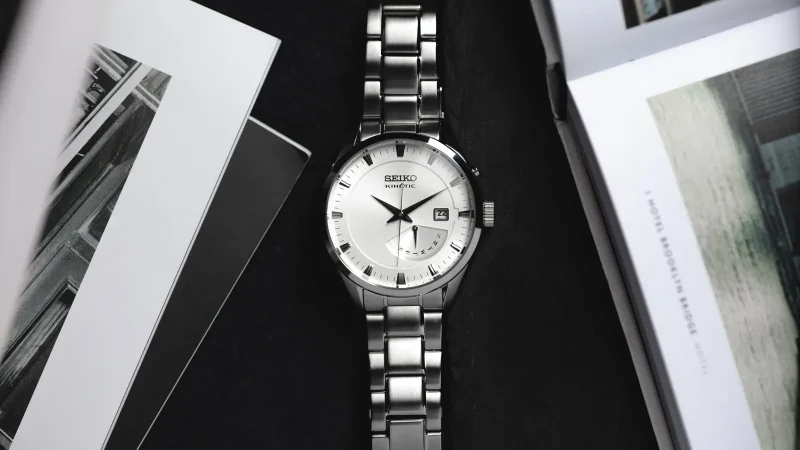
Best Watches Under $500
Ten watches from Seiko, Orient, Citizen and Tissot, each chosen for a specific job, from dress and dive to travel and solar no-fuss wear.
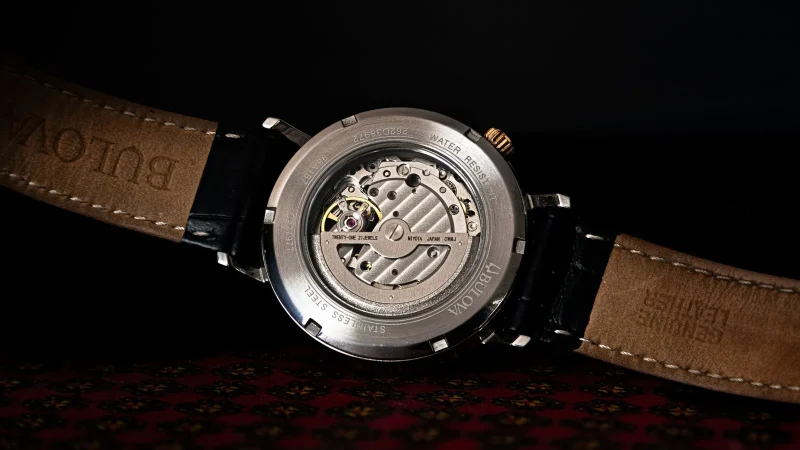
Best Automatic Watches for Beginners
Seven automatics and one hand-wound alternative for a first mechanical watch, with hacking, hand-winding, power reserve and accuracy explained.
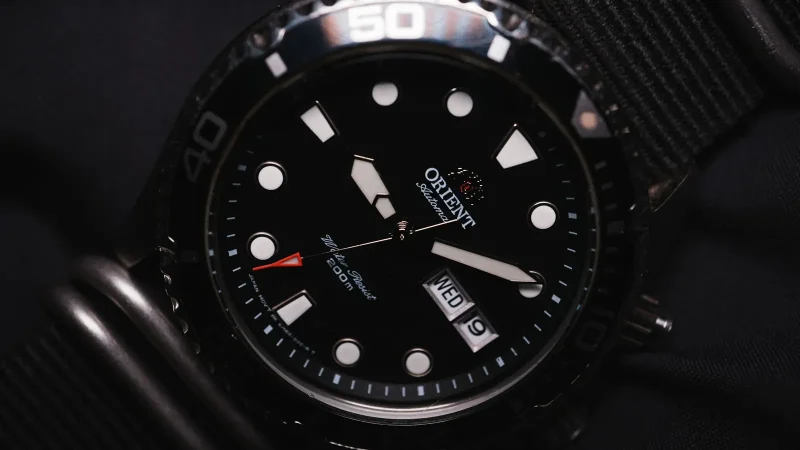
Best Affordable Dive Watches
Five divers from a budget Casio to a Swiss step-up, plus what ISO 6425, unidirectional bezels, lume and screw-down crowns actually mean.